
IV · A windswept tree
Literary narrative · Material evidence
Myself to myself.
No bread. No horn. Nine nights. Then the runes, taken up screaming.
Transcript
The Runes What must be paid for a sign that outlives the speaker? Myself to myself. No bread. No horn. Nine nights. Then the runes, taken up screaming. A vellum book, not a Viking poster Iceland is a North Atlantic island. The book that holds these stanzas was made there, in a medieval Christian manuscript culture, around 1270. It is not a Viking Age field-note from Norway. Reykjavík is where the book now lives, in the Árni Magnússon Institute. The book is vellum: calfskin, modest in the hand, written in a compact Icelandic script. Its modern shelfmark is GKS 2365 4to, the Codex Regius. Later readers call the anthology the Poetic Edda. That name is later. The surviving object is this book. Hávamál, ‘Sayings of the High One,’ is a wisdom poem inside it. The hanging lives in a stretch often called Rúnatal. The poems are widely taken to be older than the book. How much older, and whether these particular stanzas are a single composition, is scholarship, not folklore. Historical runes are a real writing practice: cut into stone, wood, bone, across the North, centuries before this manuscript. Rúnatal imagines rúnar as knowledge taken in pain. Those are not the same sentence. This page will not draw a stave-row and call it the Codex. A gift that is a taking In the so-called Rúnatal, Óðinn hangs on a windswept tree for nine nights, wounded by a spear, given to Óðinn, himself to himself. No one feeds him. He looks down. He takes up the runes, screaming, and falls back. What follows is not a cargo-list like the me. It is fertility of speech: word from word finding a word for him, deed from deed finding a deed. Nine mighty songs. A drink of precious mead. No Enki pours this. No messenger fails and is handed clay. The grammar is self-sacrifice and seizure. I know that I hung on a windy tree nine long nights, wounded with a spear, dedicated to Odin, myself to myself. Comparison is ours Not a Sumerian story in a northern coat Transfer, feast, clay Inana receives. A messenger fails and clay is patted. A priestess is named and copied. Capacities move by gift, seizure of a gift, and curriculum. Hanging, screaming, taking Óðinn is both offering and recipient. The runes are taken up, not loaded. If this reminds a modern reader of writing’s cost, that reminder is our question, not the poem’s footnote to Uruk. Similarity is not lineage. No historical transmission is claimed because two cultures imagined that a world needs signs. Poem, book, later romance The text. Old Norse stanzas in which Óðinn hangs, is wounded, takes up runes, and grows in word and deed. The book. Preserved in a thirteenth-century Icelandic vellum. The poems’ dates of composition are earlier and debated. ‘Viking Age origin’ is a range, not a timestamp. Later retelling. Modern popular Odin is often a superhero or a generic wise god. Hávamál 138–141 is stranger and poorer: hunger, a spear, a scream. Keep the poem poorer than the poster. What this story thinks a world needs A world, in this telling, needs rúnar: marks that can be taken, known, and that make more words possible. It also needs a price. The poem does not say the price is optional. It does not say the signs arrive as a civic gift from a kindly culture-hero. What must be paid for a sign that outlives the speaker?
IV
Literary narrative · Material evidence
Old Norse (Icelandic manuscript culture)
Poem older than its book; Codex Regius c. 1270
The object
Nine nights on a tree, then the taking up of runes
The question
What must be paid for a sign that outlives the speaker?
Bring me there
A vellum book, not a Viking poster
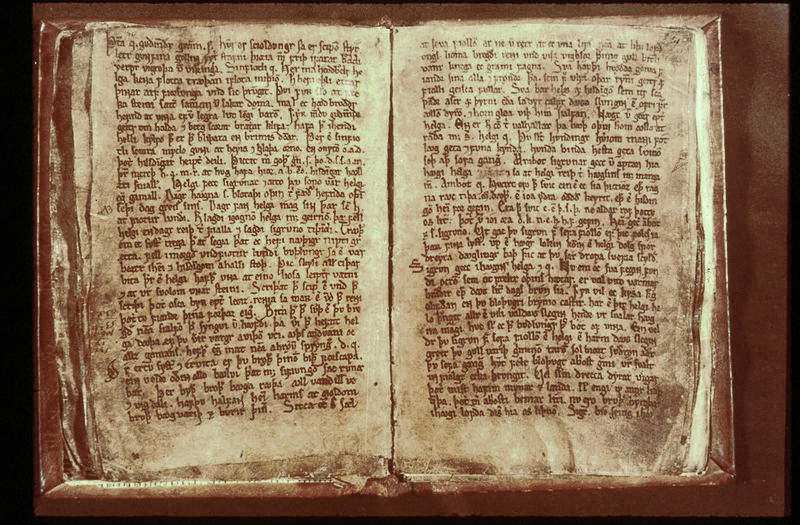
Iceland is a North Atlantic island. The book that holds these stanzas was made there, in a medieval Christian manuscript culture, around 1270. It is not a Viking Age field-note from Norway. Reykjavík is where the book now lives, in the Árni Magnússon Institute.
The book is vellum: calfskin, modest in the hand, written in a compact Icelandic script. Its modern shelfmark is GKS 2365 4to, the Codex Regius. Later readers call the anthology the Poetic Edda. That name is later. The surviving object is this book.
Hávamál, ‘Sayings of the High One,’ is a wisdom poem inside it. The hanging lives in a stretch often called Rúnatal. The poems are widely taken to be older than the book. How much older, and whether these particular stanzas are a single composition, is scholarship, not folklore.
Historical runes are a real writing practice: cut into stone, wood, bone, across the North, centuries before this manuscript. Rúnatal imagines rúnar as knowledge taken in pain. Those are not the same sentence. This page will not draw a stave-row and call it the Codex.
Let the story happen
A gift that is a taking
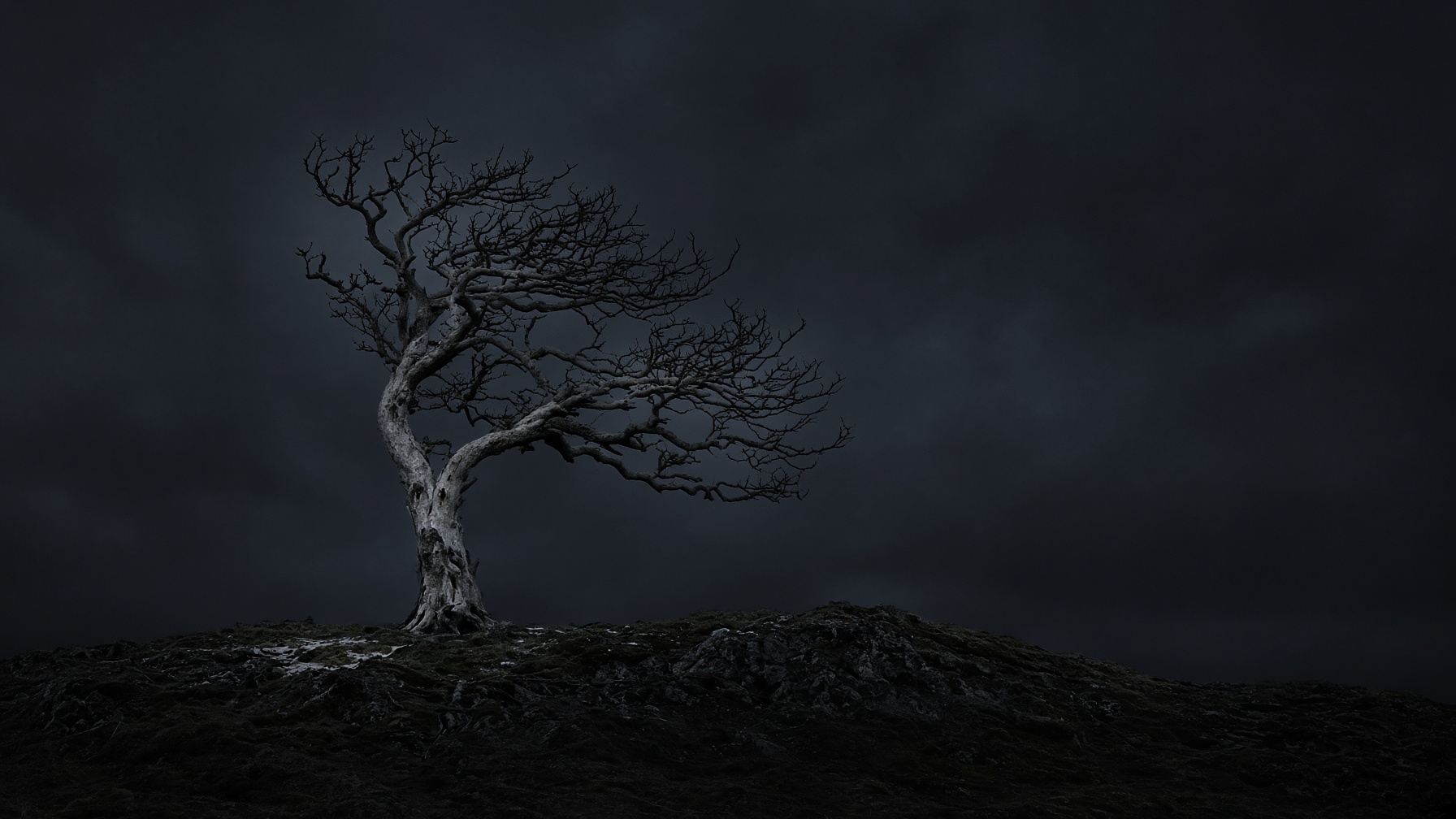
In the so-called Rúnatal, Óðinn hangs on a windswept tree for nine nights, wounded by a spear, given to Óðinn, himself to himself. No one feeds him. He looks down. He takes up the runes, screaming, and falls back.
What follows is not a cargo-list like the me. It is fertility of speech: word from word finding a word for him, deed from deed finding a deed. Nine mighty songs. A drink of precious mead.
No Enki pours this. No messenger fails and is handed clay. The grammar is self-sacrifice and seizure.
I know that I hung on a windy tree nine long nights, wounded with a spear, dedicated to Odin, myself to myself.
Comparison is ours
Not a Sumerian story in a northern coat
Mesopotamia, in this site
Transfer, feast, clay
Inana receives. A messenger fails and clay is patted. A priestess is named and copied. Capacities move by gift, seizure of a gift, and curriculum.
This poem
Hanging, screaming, taking
Óðinn is both offering and recipient. The runes are taken up, not loaded. If this reminds a modern reader of writing’s cost, that reminder is our question, not the poem’s footnote to Uruk.
Similarity is not lineage. No historical transmission is claimed because two cultures imagined that a world needs signs.
Show me the source
Codex Regius, GKS 2365 4to
A drawing of a tree is atmosphere. It is not the Codex. Generated runes would be a fake source-object. This page will not draw a counterfeit stave-row and call it evidence.
Hávamál, Codex Regius. Standard editions: Neckel/Kuhn, Jón Helgason; English: Larrington, The Poetic Edda (rev. ed.); Orchard; public-domain Bellows 1923 for a checkable older rendering. Manuscript: GKS 2365 4to, handrit.is; Árni Magnússon Institute.
Open the sourceWhat do we actually know?
Poem, book, later romance
The history
What, exactly, is historical here?
The Codex Regius is a thirteenth-century Icelandic vellum book. The stanzas are older than the book, and how much older is debated. Historical runic writing on stone, wood and bone is a real northern practice. The hanging and the taking of runes are poetry, not a field report from the Viking Age.
The text
Old Norse stanzas in which Óðinn hangs, is wounded, takes up runes, and grows in word and deed.
The history
The book
Preserved in a thirteenth-century Icelandic vellum. The poems’ dates of composition are earlier and debated. ‘Viking Age origin’ is a range, not a timestamp.
The scholarship
Later retelling
Modern popular Odin is often a superhero or a generic wise god. Hávamál 138–141 is stranger and poorer: hunger, a spear, a scream. Keep the poem poorer than the poster.
From this story only
What this story thinks a world needs
A world, in this telling, needs rúnar: marks that can be taken, known, and that make more words possible. It also needs a price. The poem does not say the price is optional. It does not say the signs arrive as a civic gift from a kindly culture-hero.
What must be paid for a sign that outlives the speaker?