
IX · Traces
Literary narrative · Legendary figure
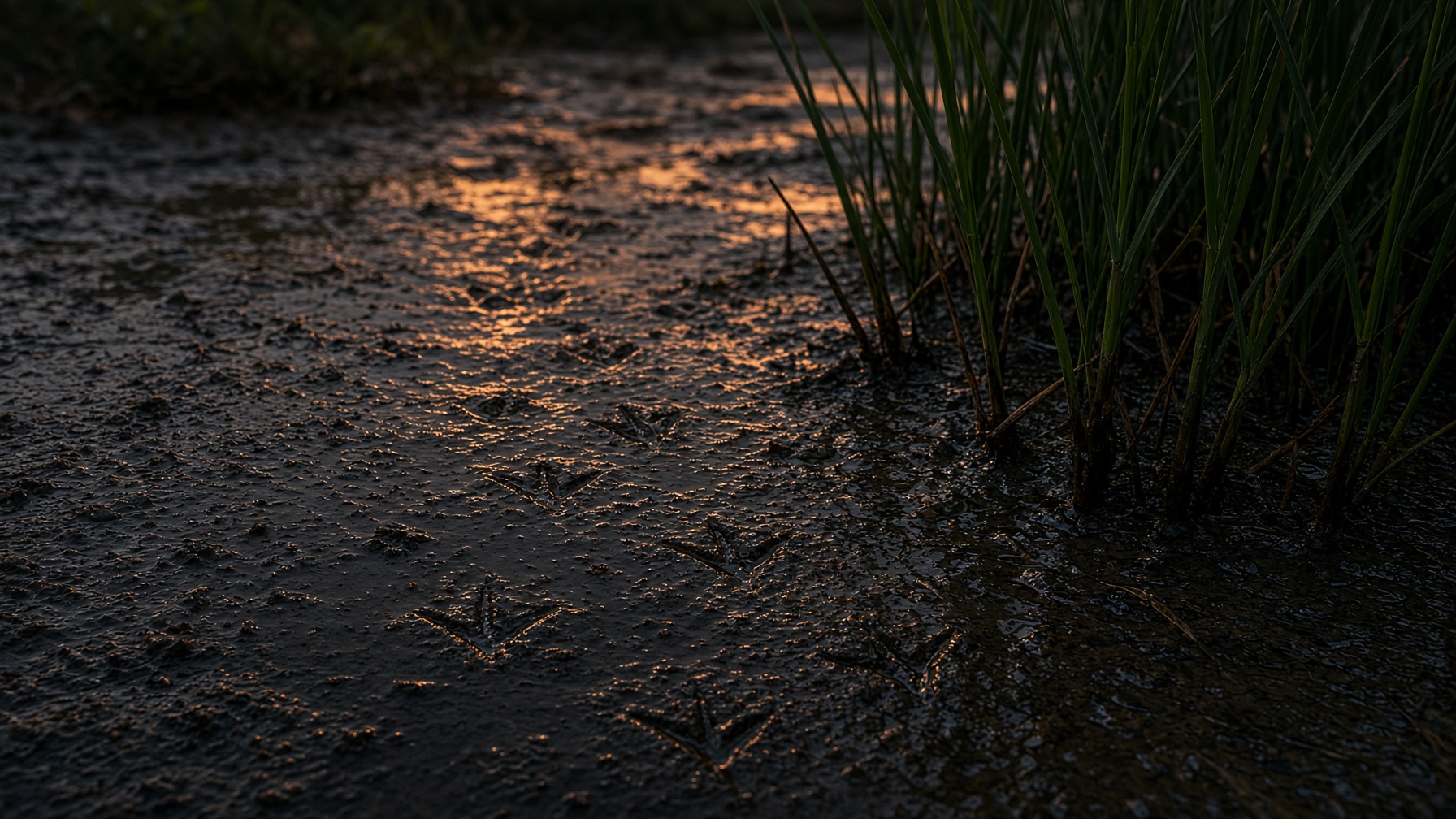
He saw that the prints could be told apart.
The scribe of the Yellow Emperor looks at the tracks of birds and beasts. Difference becomes a mark. The mark can be made again.
Transcript
The Tracks What happens when tracks become a script? He saw that the prints could be told apart. The scribe of the Yellow Emperor looks at the tracks of birds and beasts. Difference becomes a mark. The mark can be made again. A Han book about graphs, not a Shang pit The Yellow Emperor cannot be planted. His court is a later imagination of a first order. Cangjie, in the telling this room keeps, is that court’s scribe: shi, the officer who records. The name is 倉頡, also written 蒼頡. English usually writes Cangjie. The book that tells the hinge is Xu Shen’s Shuowen Jiezi, finished about 100 CE and submitted in 121. It is a character dictionary with a postface that gives a history of writing. Xu Shen is a historical scholar of the Eastern Han. The postface is not a witness to the second millennium BCE. Anyang is a real city. The ruins called Yinxu, in what is now Henan, are the last Shang capital. From the late thirteenth century BCE, kings had questions burnt into cattle scapulae and turtle plastrons, and the graphs of those questions survive. That script was recognised as writing in 1899. It is the earliest Chinese writing we can actually read. It is not Cangjie’s walk along a river of prints. Knotted cords, then traces, then graphs Xu Shen does not begin with Cangjie. In antiquity, he says, Paoxi, Fuxi, ruled as king. Looking up he observed the heavens; looking down, the earth. He saw the marking-patterns on birds and wild animals. He made the eight trigrams. Then Shennong knotted cords to govern affairs. Occupations multiplied. Ornament and artifice sprouted. The cords were not enough. Then the scribe of the Yellow Emperor. Cangjie saw the traces of the footprints and tracks of birds and wild animals. He understood that their linear structures could be distinguished from one another. He first created writing. The hundred officials became regulated. The myriad things became discriminated. When Cangjie first made writing, Xu Shen says, he followed categories and copied forms according to resemblance. Those were called wen, patterns. Later, form and sound were added to each other. Those were called zi. The word is made to mean increase, proliferation. Written on bamboo and silk, it is shu, writing. The Scribe of the Yellow Emperor, Cangjie, observing the traces of the footprints and tracks of birds and wild animals, understood that their linear structures could be distinguished from one another by the differences between them. Heaven rained millet. Ghosts wept at night. Another Han book tells a different beat of the same name. The Huainanzi, presented to the throne in 139 BCE, is older than Xu Shen’s dictionary. In the chapter called Benjing, the Classic of Fundamentals, Cangjie’s making of writing is not a classification. It is a cost. In ancient times, when Cangjie invented writing, heaven rained millet, and ghosts wept at night. Boyi dug wells, and dragons rose into dark cloud. The more abilities, the thinner the virtue. Xu Shen’s Cangjie looks, distinguishes, and makes a world of offices readable. The Huainanzi’s Cangjie makes a world that weeps. Do not crush them into one lesson. The millet rain is not in the Shuowen sentence. The hundred officials are not in the Benjing omen. In ancient times, when Cangjie invented writing, heaven rained millet, and ghosts wept at night. Two clocks A legendary scribe is not a scapula Cangjie sees difference A Han scholarly story: tracks can be told apart; graphs can be made; wen then zi; officials can be regulated. A second Han story: the invention is an omen, millet and weeping. Both are literature about writing. Neither is a pit at Anyang. Shang writing we can read Late Shang graphs on bone and shell, thirteenth and twelfth centuries BCE, recovered at Yinxu. A complete writing system already. Recognised in 1899. This is palaeography. It does not need a first scribe in order to exist, and it does not prove one. Do not impersonate Shang palaeography with a picture of tracks. Do not use the bones as a caption for Xu Shen. The clocks stay apart. The scholarship A postface is an argument Timothy O’Neill’s 2013 annotated English of the Shuowen postface is the scholarly door this room uses for the Cangjie sentences. Françoise Bottéro has shown how Xu Shen’s wen and zi are doing work: pattern first, then the proliferating compound. Fabrizio Pregadio sets the same postface in a longer history of signs, Fuxi then Shennong then Cangjie. Fuxi’s trigrams are not this room. They remain held. The Huainanzi’s millet and ghosts belong to a different moral. Major, Queen, Meyer and Roth 2010 is the complete English. Chinese Text Project holds both the Shuowen and the Benjing as public text. Legendary inventor versus long script development is the ordinary scholarly dispute. This site will not write that Cangjie invented Chinese characters in a dated year of the Yellow Emperor. It will not write that the oracle bones are his. Similarity of image is not lineage. Legend, dictionary, bone The text. Xu Shen’s postface: Cangjie, scribe of the Yellow Emperor, sees bird and beast tracks, understands that their structures can be distinguished, and first creates writing. Wen by resemblance; later zi by form and sound. The Huainanzi, separately: when Cangjie made writing, heaven rained millet and ghosts wept at night. The history. Xu Shen is Eastern Han. The Huainanzi is Western Han, presented 139 BCE. Late Shang writing at Anyang is centuries earlier than both books and is not derived from them. Cangjie as a historical person is not established. The scholarship. O’Neill 2013 for the postface English. Bottéro on wen and zi. Pregadio on the three-stage history of signs. Major et al. 2010 for the Huainanzi. The Anyang corpus for the bones. Report the clocks. Do not collapse them. What this is not. It is not the archaeological invention of Chinese writing. It is not Fuxi’s trigrams. It is not Shennong’s knotted cords as this room’s cargo. It is not Enmerkar patting clay because a mouth is tired. It is not Odin taking runes in pain. Comparison is ours. CANGJIE. On the four English faces: 49, 140, 31, 41. Miss. XUSHEN misses. SHUOWEN misses. THE TRACKS misses. The number did not put the prints in the silt. The postface did. No plate. What this story thinks a world needs A world, here, needs marks that can be told apart. The hinge is not a tired mouth, and it is not a seizure. It is observation: difference already in the ground, then a graph that can be made again. Offices can be regulated because the myriad things can be discriminated. It also needs, in the older Han omen, a cost. Heaven rains millet. Ghosts weep. Ability is not only a gift. The two needs are in two books. This room will not pick one and call it China. What happens when tracks become a script? Another origin of marks Enmerkar pats clay because a messenger’s mouth is tired. That is a Sumerian literary scene about speech that will not fit. Cangjie sees tracks. One canonical home each. Fuxi’s trigrams remain held Xu Shen puts trigrams before Cangjie. That chronology is his. The repair of the sky, and the trigrams as a separate dossier, stay in Hold. This room keeps the tracks.
IX
Literary narrative · Legendary figure
Chinese; legendary inventor in a Han telling
Xu Shen’s postface, submitted 121 CE. Huainanzi earlier in the Han. Oracle-bone script is a different clock.
The object
The traces of birds and beasts, seen as patterns
The question
What happens when tracks become a script?
Bring me there
A Han book about graphs, not a Shang pit
The Yellow Emperor cannot be planted. His court is a later imagination of a first order. Cangjie, in the telling this room keeps, is that court’s scribe: shi, the officer who records. The name is 倉頡, also written 蒼頡. English usually writes Cangjie.
The book that tells the hinge is Xu Shen’s Shuowen Jiezi, finished about 100 CE and submitted in 121. It is a character dictionary with a postface that gives a history of writing. Xu Shen is a historical scholar of the Eastern Han. The postface is not a witness to the second millennium BCE.
Anyang is a real city. The ruins called Yinxu, in what is now Henan, are the last Shang capital. From the late thirteenth century BCE, kings had questions burnt into cattle scapulae and turtle plastrons, and the graphs of those questions survive. That script was recognised as writing in 1899. It is the earliest Chinese writing we can actually read. It is not Cangjie’s walk along a river of prints.
Let the story happen
Knotted cords, then traces, then graphs
Xu Shen does not begin with Cangjie. In antiquity, he says, Paoxi, Fuxi, ruled as king. Looking up he observed the heavens; looking down, the earth. He saw the marking-patterns on birds and wild animals. He made the eight trigrams.
Then Shennong knotted cords to govern affairs. Occupations multiplied. Ornament and artifice sprouted. The cords were not enough.
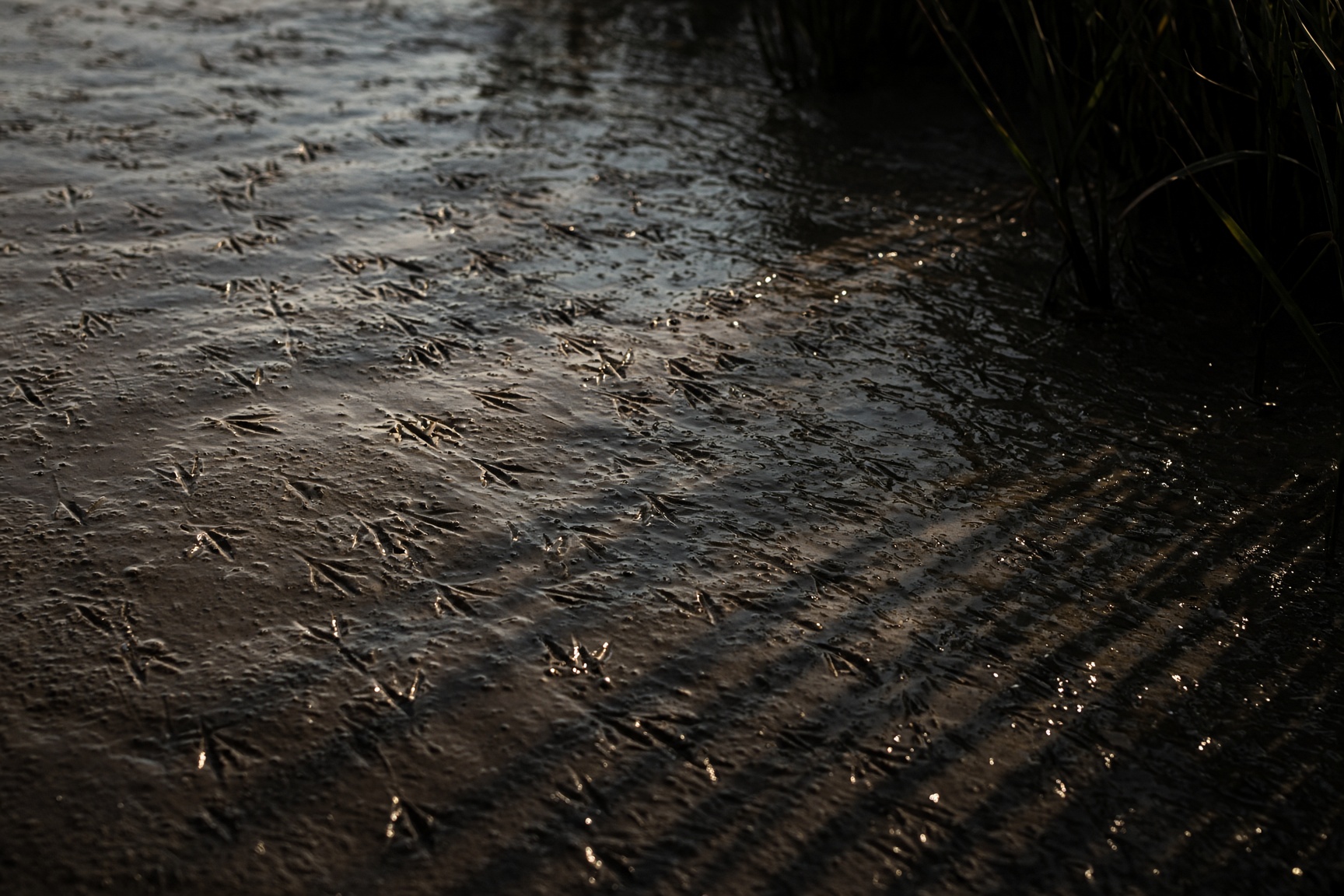
Then the scribe of the Yellow Emperor. Cangjie saw the traces of the footprints and tracks of birds and wild animals. He understood that their linear structures could be distinguished from one another. He first created writing. The hundred officials became regulated. The myriad things became discriminated.
When Cangjie first made writing, Xu Shen says, he followed categories and copied forms according to resemblance. Those were called wen, patterns. Later, form and sound were added to each other. Those were called zi. The word is made to mean increase, proliferation. Written on bamboo and silk, it is shu, writing.
The Scribe of the Yellow Emperor, Cangjie, observing the traces of the footprints and tracks of birds and wild animals, understood that their linear structures could be distinguished from one another by the differences between them.
Stop at the strange thing
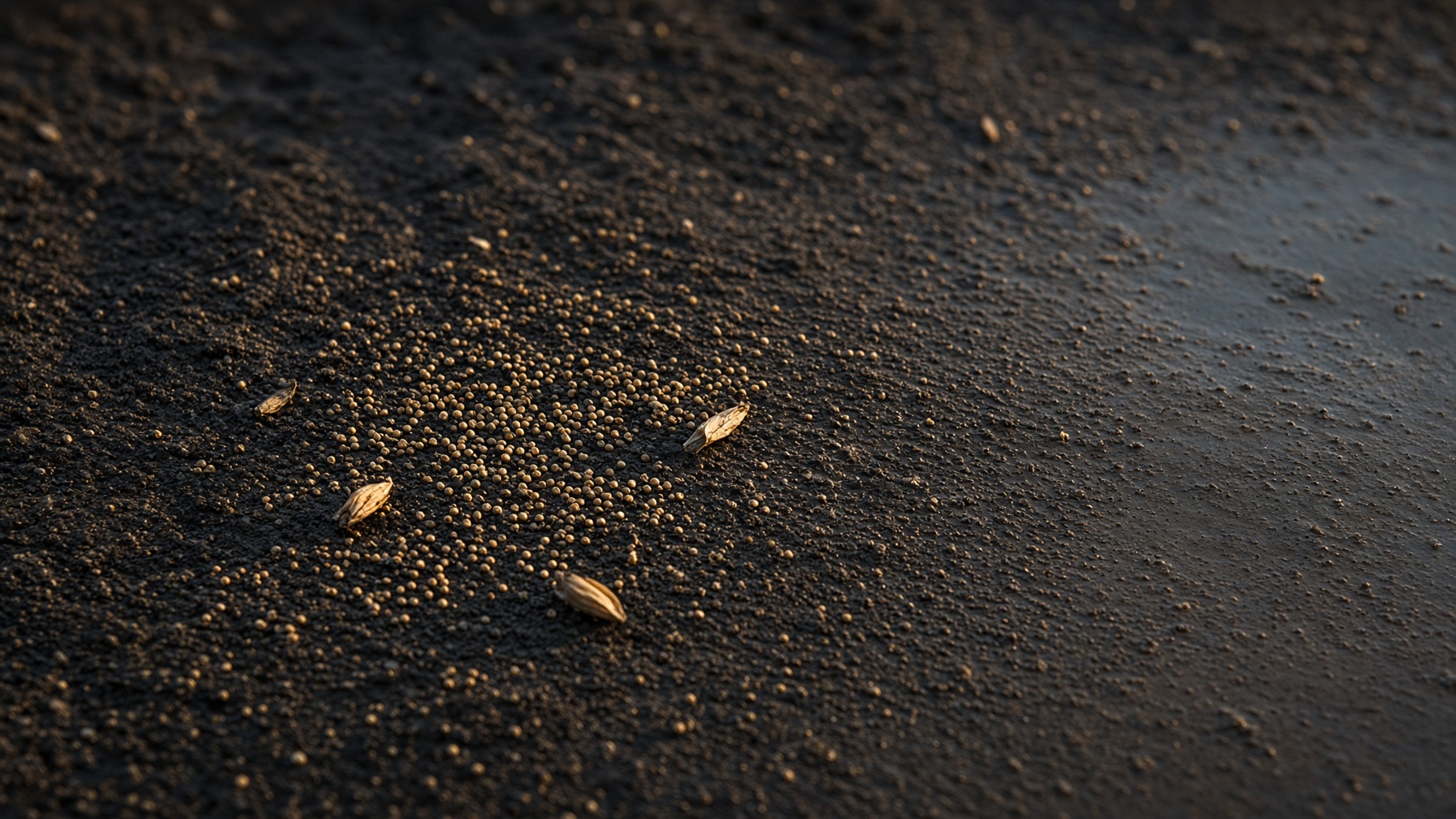
Heaven rained millet. Ghosts wept at night.
Another Han book tells a different beat of the same name. The Huainanzi, presented to the throne in 139 BCE, is older than Xu Shen’s dictionary. In the chapter called Benjing, the Classic of Fundamentals, Cangjie’s making of writing is not a classification. It is a cost.
In ancient times, when Cangjie invented writing, heaven rained millet, and ghosts wept at night. Boyi dug wells, and dragons rose into dark cloud. The more abilities, the thinner the virtue.
Xu Shen’s Cangjie looks, distinguishes, and makes a world of offices readable. The Huainanzi’s Cangjie makes a world that weeps. Do not crush them into one lesson. The millet rain is not in the Shuowen sentence. The hundred officials are not in the Benjing omen.
In ancient times, when Cangjie invented writing, heaven rained millet, and ghosts wept at night.
Two clocks
A legendary scribe is not a scapula
The telling
Cangjie sees difference
A Han scholarly story: tracks can be told apart; graphs can be made; wen then zi; officials can be regulated. A second Han story: the invention is an omen, millet and weeping. Both are literature about writing. Neither is a pit at Anyang.
The bones
Shang writing we can read
Late Shang graphs on bone and shell, thirteenth and twelfth centuries BCE, recovered at Yinxu. A complete writing system already. Recognised in 1899. This is palaeography. It does not need a first scribe in order to exist, and it does not prove one.
Do not impersonate Shang palaeography with a picture of tracks. Do not use the bones as a caption for Xu Shen. The clocks stay apart.
The scholarship
A postface is an argument
Timothy O’Neill’s 2013 annotated English of the Shuowen postface is the scholarly door this room uses for the Cangjie sentences. Françoise Bottéro has shown how Xu Shen’s wen and zi are doing work: pattern first, then the proliferating compound. Fabrizio Pregadio sets the same postface in a longer history of signs, Fuxi then Shennong then Cangjie. Fuxi’s trigrams are not this room. They remain held.
The Huainanzi’s millet and ghosts belong to a different moral. Major, Queen, Meyer and Roth 2010 is the complete English. Chinese Text Project holds both the Shuowen and the Benjing as public text.
Legendary inventor versus long script development is the ordinary scholarly dispute. This site will not write that Cangjie invented Chinese characters in a dated year of the Yellow Emperor. It will not write that the oracle bones are his. Similarity of image is not lineage.
Show me the source
A postface, a Han book, a later pit
A picture of tracks in silt is atmosphere. It is not Cangjie’s walk, and it is not an oracle bone. Generated images do not impersonate a Shang scapula. The postface is the source of the look. The Huainanzi is the source of the millet. Yinxu is the source of the earliest graphs we can read. Where they disagree in kind, the disagreement is the scholarship.
Xu Shen, Shuowen Jiezi postface. English of the Cangjie sentences after O’Neill, JAOS 133.3 (2013). Huainanzi, Benjing: Chinese Text Project; Major, Queen, Meyer and Roth, The Huainanzi (Columbia, 2010). Public text door for the Shuowen: ctext.org/shuo-wen-jie-zi.
Open the sourceWhat do we actually know?
Legend, dictionary, bone
The history
What, exactly, is historical here?
Anyang, the last Shang capital, is an archaeological city in what is now Henan. Late Shang writing on bone and shell is attested from the thirteenth and twelfth centuries BCE. Cangjie, the Yellow Emperor, Fuxi and Shennong are legendary figures in later literary accounts of how writing began. Xu Shen’s postface is a Han scholarly story about graphs. It is not a field-note from Shang.
The text
Xu Shen’s postface: Cangjie, scribe of the Yellow Emperor, sees bird and beast tracks, understands that their structures can be distinguished, and first creates writing. Wen by resemblance; later zi by form and sound. The Huainanzi, separately: when Cangjie made writing, heaven rained millet and ghosts wept at night.
The history
Xu Shen is Eastern Han. The Huainanzi is Western Han, presented 139 BCE. Late Shang writing at Anyang is centuries earlier than both books and is not derived from them. Cangjie as a historical person is not established.
The scholarship
O’Neill 2013 for the postface English. Bottéro on wen and zi. Pregadio on the three-stage history of signs. Major et al. 2010 for the Huainanzi. The Anyang corpus for the bones. Report the clocks. Do not collapse them.
The scholarship
What this is not
It is not the archaeological invention of Chinese writing. It is not Fuxi’s trigrams. It is not Shennong’s knotted cords as this room’s cargo. It is not Enmerkar patting clay because a mouth is tired. It is not Odin taking runes in pain. Comparison is ours.
Miss
CANGJIE
On the four English faces: 49, 140, 31, 41. Miss. XUSHEN misses. SHUOWEN misses. THE TRACKS misses. The number did not put the prints in the silt. The postface did. No plate.
From this story only
What this story thinks a world needs
A world, here, needs marks that can be told apart. The hinge is not a tired mouth, and it is not a seizure. It is observation: difference already in the ground, then a graph that can be made again. Offices can be regulated because the myriad things can be discriminated.
It also needs, in the older Han omen, a cost. Heaven rains millet. Ghosts weep. Ability is not only a gift. The two needs are in two books. This room will not pick one and call it China.
What happens when tracks become a script?