
VIII · Eridu
Literary narrative · Legendary figure
He broke the wing of the south wind.
For seven days it did not blow upon the land. Heaven asked for him.
Transcript
The Wind Can a world have wisdom and still be mortal? He broke the wing of the south wind. For seven days it did not blow upon the land. Heaven asked for him. A sage who fishes Eridu sits at the southwestern edge of the southern Mesopotamian alluvium. The Boat already planted it: Enki’s house, the abzu, the first city in later Sumerian tradition. This room returns to that house under another name. Ea is Enki in Akkadian. The feast that loaded the me is not this story. Do not crush them. Adapa is called a sage of Eridu, a son or creature of Ea, endowed with wisdom. Later tradition lists him among the antediluvian apkallu, the sages who brought arts to the human world before the flood. That list is later. The myth we can actually read does not need it in order to begin. The copies are Akkadian. The longest continuous telling we have is a scholarly tablet from Amarna in Egypt, EA 356, written in the fourteenth century BCE, far from Eridu, in a diplomatic archive that also kept myths as school-texts. Five other fragments come from Nineveh, from Assurbanipal’s libraries, about seven centuries later. They are not one book. They are recensions. A wind that can be spoken against Adapa is fishing in the sea off Eridu. The south wind blows and throws him. In anger he speaks against it. The wing of the south wind is broken. For seven days the south wind does not blow upon the land. Anu, the sky god, notices the stillness. His minister Ilabrat tells him who did it. Anu says: bring him here. Ea, who knows the road to heaven before Adapa walks it, gives counsel. Adapa is to put on mourning garments. At the gate of Anu he will meet Dumuzi and Gizzida. They will ask why he looks so. He is to say that two gods have vanished from the land. They will speak well of him to Anu. Then the hinge. Food of death they will set before you: eat not. Water of death they will set before you: drink not. A garment, put on. Oil, anoint. Hold the words. Food of death they will set before thee, eat not. Water of death they will set before thee, drink not. Garments they will set before thee, put them on. Oil they will set before thee, anoint thyself. The counsel that I have given thee, forget not. The food was life. He did not eat. Adapa does as he was told. Dumuzi and Gizzida see the mourning and laugh, or intercede; the tone depends on the recension. Anu asks why the south wind’s wing is broken. Adapa answers as a fisherman: the wind threw him toward the house of his lord; he broke its wing. Anu, seeing what wisdom Ea has put in this man, changes the table. Food of life is brought. Water of life is brought. Adapa does not eat. He does not drink. He puts on the garment. He anoints with oil. He has held the words. Anu is astonished. Why did you not eat? Why did you not drink? You would not have died. Adapa answers: Ea my lord said, eat not, drink not. He is returned to earth. Humanity remains mortal. The wisdom remains. Food of life they brought him, but he ate not. Water of life they brought him, but he drank not. The dispute Does Ea trick, or protect? A rival is not wanted A common modern reading: Ea knows Anu will offer life, and names it death so that Adapa will refuse. The sage stays mortal. The god of the abzu keeps a monopoly on what the sky might have given. The words were true when spoken Another reading: Ea warns against Anu’s first intent. Anu changes the offering when he sees the wisdom. The counsel was protection, and it outlives the change. Izre'el’s title is the colder frame: language has the power of life and death. The tablets do not settle this. Report the controversy. Do not pick a moral and call it the myth. The scholarship Recensions, not a novel Shlomo Izre'el’s 2001 edition remains the hinge: transliteration, translation, and an argument that the myth is about the power of speech. Foster’s Before the Muses is the readable English many students meet. The public scholarly door is now the electronic Babylonian Library corpus L/1/7. That is not ETCSL. There is still no one popular composite that hides the joins. The Amarna tablet is a school text with verse-points. It was copied in Egypt. It is not a field-note from Eridu. The Nineveh fragments do not always tell the same beats. A Nineveh opening can state, before the fishing, that Ea gave Adapa wisdom and did not give him eternal life. That is a frame, not a spoiler from another book. Do not make Adapa into Adam. The comparison is modern, old, and tempting. The myth does not name a garden, a woman, or a fall. It names a wind, a gate, a table, and a refusal that follows counsel. A sage, a wind, a table The text. An Akkadian myth in which Adapa of Eridu breaks the south wind, is summoned to Anu, follows Ea’s counsel, and does not eat the food of life or drink the water of life. He returns mortal. Wisdom remains. The history. Eridu is real. The Amarna tablet is real, fourteenth century BCE, a scholarly copy in Egypt. Nineveh fragments are later. Adapa as a historical person is not established. The apkallu list is a later frame. The scholarship. Izre'el 2001 is the edition. Foster is the classroom English. eBL is the public corpus door. Whether Ea tricks or protects is not settled. Speech as the power that breaks a wind and binds a man to a table is Izre'el’s reading, not the only one. What this is not. It is not the Boat of Heaven. It is not the origin of death in a biblical key. It is not proof that Mesopotamians thought mortality was a trick. It is not a second Enki feast. ADAPA. On the four English faces: 23, 112, 14, 31. Miss. The number did not put the food on the table. The tablets did. No plate. What this story thinks a world needs A world, here, can have wisdom and still be mortal. The food of life is not grain. It is not the me. It is an offering that can be refused, and a counsel that can outrun the offering. It also needs a speech that does things. A mouth breaks a wind. A mouth holds a warning. The wind is not a metaphor laid on later. In the telling, language has force enough to still a climate and to keep a man from a table. Can a world have wisdom and still be mortal? Ea has another house The feast, the cargo of me, and the Boat of Heaven stay in The Boat. This room keeps the wind and the uneaten food. One canonical home each.
VIII
Literary narrative · Legendary figure
Akkadian; Eridu in the telling
Amarna tablet fourteenth century BCE; Nineveh fragments centuries later
The object
The offered food not eaten
The question
Can a world have wisdom and still be mortal?
Bring me there
A sage who fishes
Eridu sits at the southwestern edge of the southern Mesopotamian alluvium. The Boat already planted it: Enki’s house, the abzu, the first city in later Sumerian tradition. This room returns to that house under another name. Ea is Enki in Akkadian. The feast that loaded the me is not this story. Do not crush them.
Adapa is called a sage of Eridu, a son or creature of Ea, endowed with wisdom. Later tradition lists him among the antediluvian apkallu, the sages who brought arts to the human world before the flood. That list is later. The myth we can actually read does not need it in order to begin.
The copies are Akkadian. The longest continuous telling we have is a scholarly tablet from Amarna in Egypt, EA 356, written in the fourteenth century BCE, far from Eridu, in a diplomatic archive that also kept myths as school-texts. Five other fragments come from Nineveh, from Assurbanipal’s libraries, about seven centuries later. They are not one book. They are recensions.
Let the story happen
A wind that can be spoken against
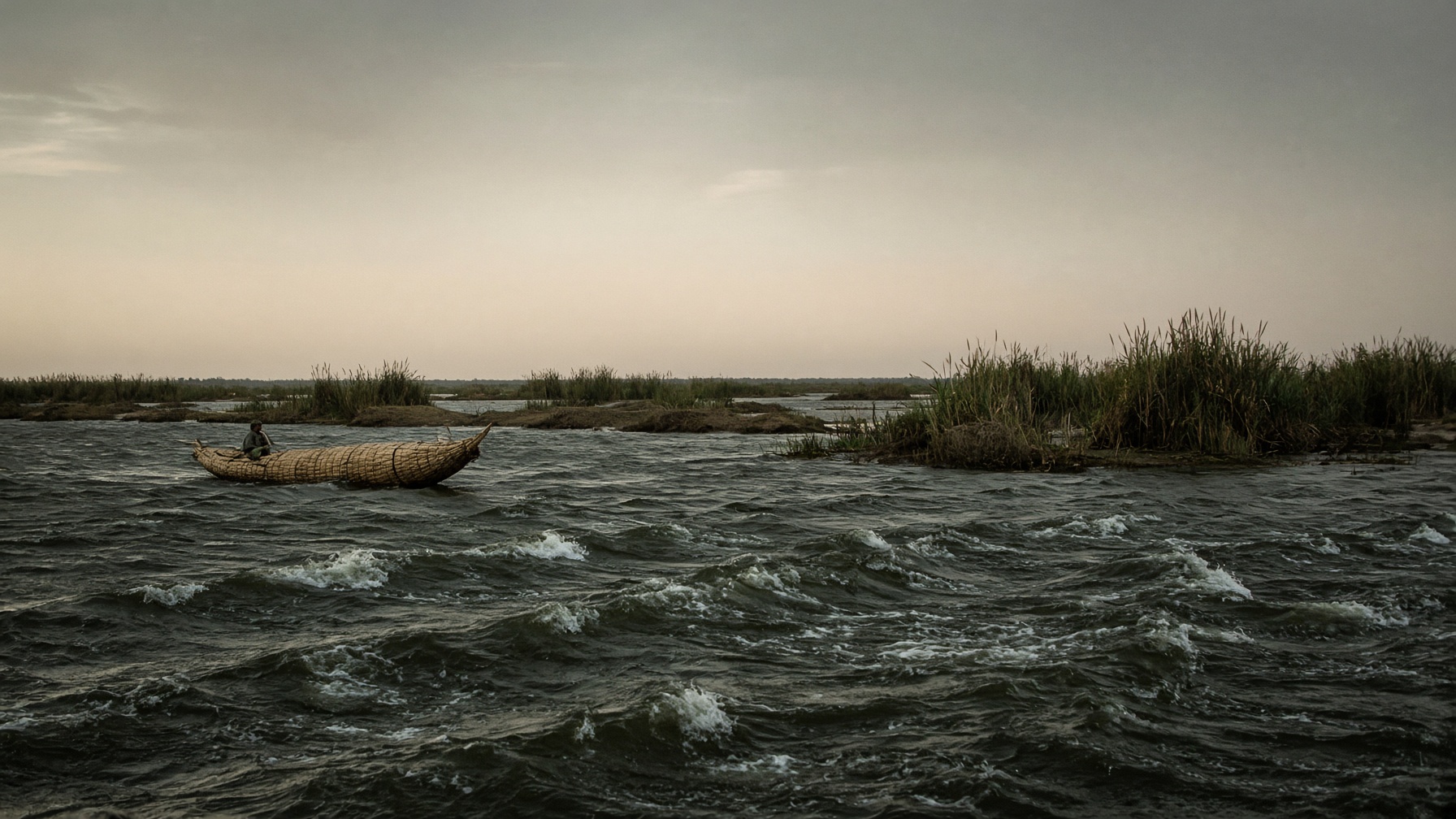
Adapa is fishing in the sea off Eridu. The south wind blows and throws him. In anger he speaks against it. The wing of the south wind is broken. For seven days the south wind does not blow upon the land.
Anu, the sky god, notices the stillness. His minister Ilabrat tells him who did it. Anu says: bring him here.
Ea, who knows the road to heaven before Adapa walks it, gives counsel. Adapa is to put on mourning garments. At the gate of Anu he will meet Dumuzi and Gizzida. They will ask why he looks so. He is to say that two gods have vanished from the land. They will speak well of him to Anu.
Then the hinge. Food of death they will set before you: eat not. Water of death they will set before you: drink not. A garment, put on. Oil, anoint. Hold the words.
Food of death they will set before thee, eat not. Water of death they will set before thee, drink not. Garments they will set before thee, put them on. Oil they will set before thee, anoint thyself. The counsel that I have given thee, forget not.
Stop at the strange thing
The food was life. He did not eat.
Adapa does as he was told. Dumuzi and Gizzida see the mourning and laugh, or intercede; the tone depends on the recension. Anu asks why the south wind’s wing is broken. Adapa answers as a fisherman: the wind threw him toward the house of his lord; he broke its wing.
Anu, seeing what wisdom Ea has put in this man, changes the table. Food of life is brought. Water of life is brought. Adapa does not eat. He does not drink. He puts on the garment. He anoints with oil. He has held the words.
Anu is astonished. Why did you not eat? Why did you not drink? You would not have died. Adapa answers: Ea my lord said, eat not, drink not. He is returned to earth. Humanity remains mortal. The wisdom remains.
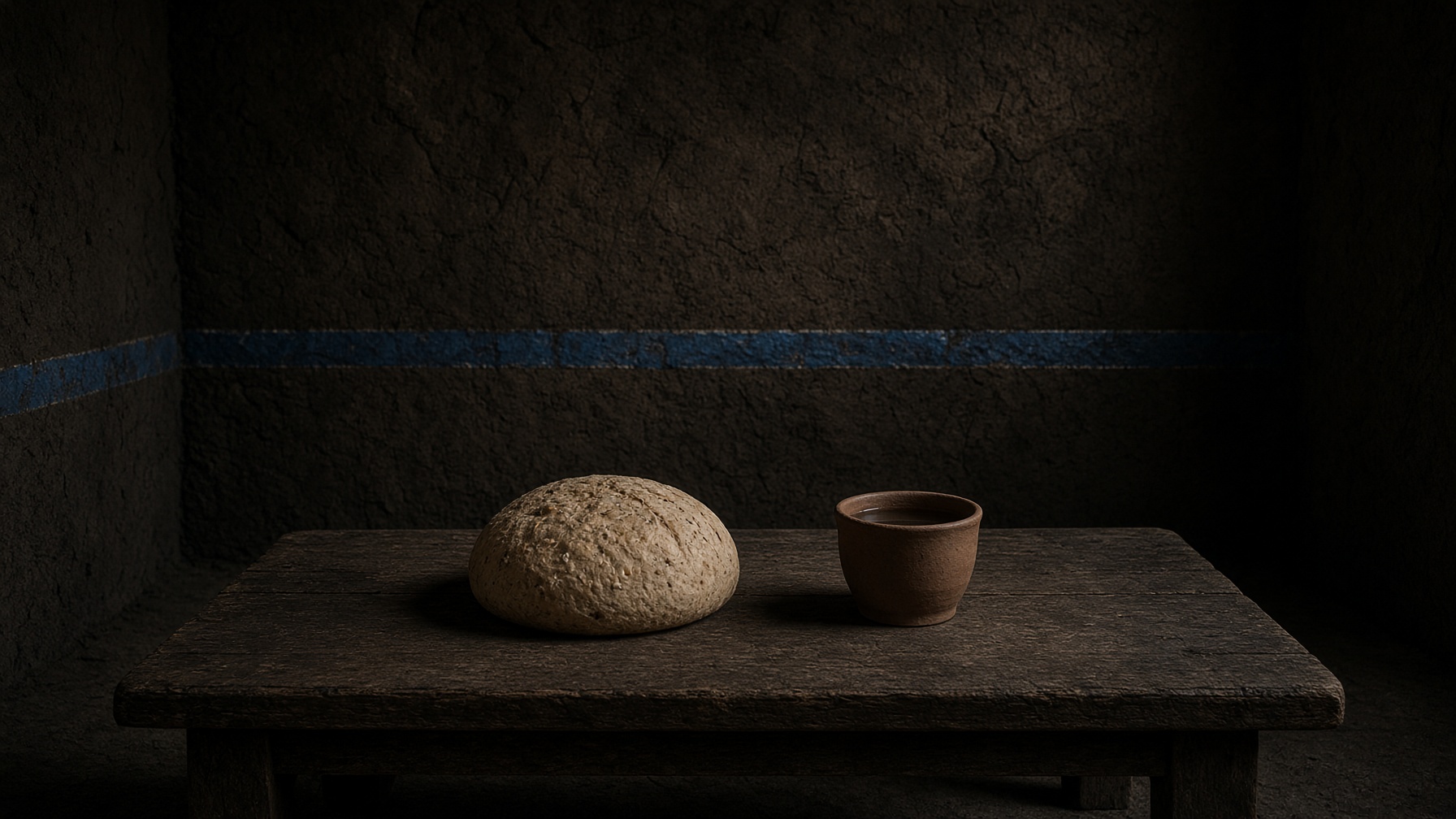
Food of life they brought him, but he ate not. Water of life they brought him, but he drank not.
The dispute
Does Ea trick, or protect?
Trick
A rival is not wanted
A common modern reading: Ea knows Anu will offer life, and names it death so that Adapa will refuse. The sage stays mortal. The god of the abzu keeps a monopoly on what the sky might have given.
Protect
The words were true when spoken
Another reading: Ea warns against Anu’s first intent. Anu changes the offering when he sees the wisdom. The counsel was protection, and it outlives the change. Izre'el’s title is the colder frame: language has the power of life and death.
The tablets do not settle this. Report the controversy. Do not pick a moral and call it the myth.
The scholarship
Recensions, not a novel
Shlomo Izre'el’s 2001 edition remains the hinge: transliteration, translation, and an argument that the myth is about the power of speech. Foster’s Before the Muses is the readable English many students meet. The public scholarly door is now the electronic Babylonian Library corpus L/1/7. That is not ETCSL. There is still no one popular composite that hides the joins.
The Amarna tablet is a school text with verse-points. It was copied in Egypt. It is not a field-note from Eridu. The Nineveh fragments do not always tell the same beats. A Nineveh opening can state, before the fishing, that Ea gave Adapa wisdom and did not give him eternal life. That is a frame, not a spoiler from another book.
Do not make Adapa into Adam. The comparison is modern, old, and tempting. The myth does not name a garden, a woman, or a fall. It names a wind, a gate, a table, and a refusal that follows counsel.
Show me the source
Amarna, Nineveh, an edition
A picture of a reed boat in wind is atmosphere. It is not Adapa’s boat, and it is not evidence. The Amarna tablet is a real object in Berlin. The myth is literature. The food of life is in the words, not in a museum case.
Izre'el, Adapa and the South Wind (Eisenbrauns, 2001). Public corpus: eBL L/1/7. Object: CDLI P270855, VAT 348, EA 356. Readable English: Foster, Before the Muses (3rd ed., 2005). Older public English of the pulls: Rogers, Cuneiform Parallels to the Old Testament (1912).
Open the sourceWhat do we actually know?
A sage, a wind, a table
The history
What, exactly, is historical here?
Eridu is an archaeological city. Ea (Enki) and Anu are gods of a historical religion. Adapa is a literary sage, later listed among the antediluvian apkallu. The south wind, the gate, and the uneaten food are a myth known from an Amarna scholarly tablet (EA 356) and later Assyrian fragments. It is not a documentary of a historical man who refused to become a god.
The text
An Akkadian myth in which Adapa of Eridu breaks the south wind, is summoned to Anu, follows Ea’s counsel, and does not eat the food of life or drink the water of life. He returns mortal. Wisdom remains.
The history
Eridu is real. The Amarna tablet is real, fourteenth century BCE, a scholarly copy in Egypt. Nineveh fragments are later. Adapa as a historical person is not established. The apkallu list is a later frame.
The scholarship
Izre'el 2001 is the edition. Foster is the classroom English. eBL is the public corpus door. Whether Ea tricks or protects is not settled. Speech as the power that breaks a wind and binds a man to a table is Izre'el’s reading, not the only one.
The scholarship
What this is not
It is not the Boat of Heaven. It is not the origin of death in a biblical key. It is not proof that Mesopotamians thought mortality was a trick. It is not a second Enki feast.
Miss
ADAPA
On the four English faces: 23, 112, 14, 31. Miss. The number did not put the food on the table. The tablets did. No plate.
From this story only
What this story thinks a world needs
A world, here, can have wisdom and still be mortal. The food of life is not grain. It is not the me. It is an offering that can be refused, and a counsel that can outrun the offering.
It also needs a speech that does things. A mouth breaks a wind. A mouth holds a warning. The wind is not a metaphor laid on later. In the telling, language has force enough to still a climate and to keep a man from a table.
Can a world have wisdom and still be mortal?