
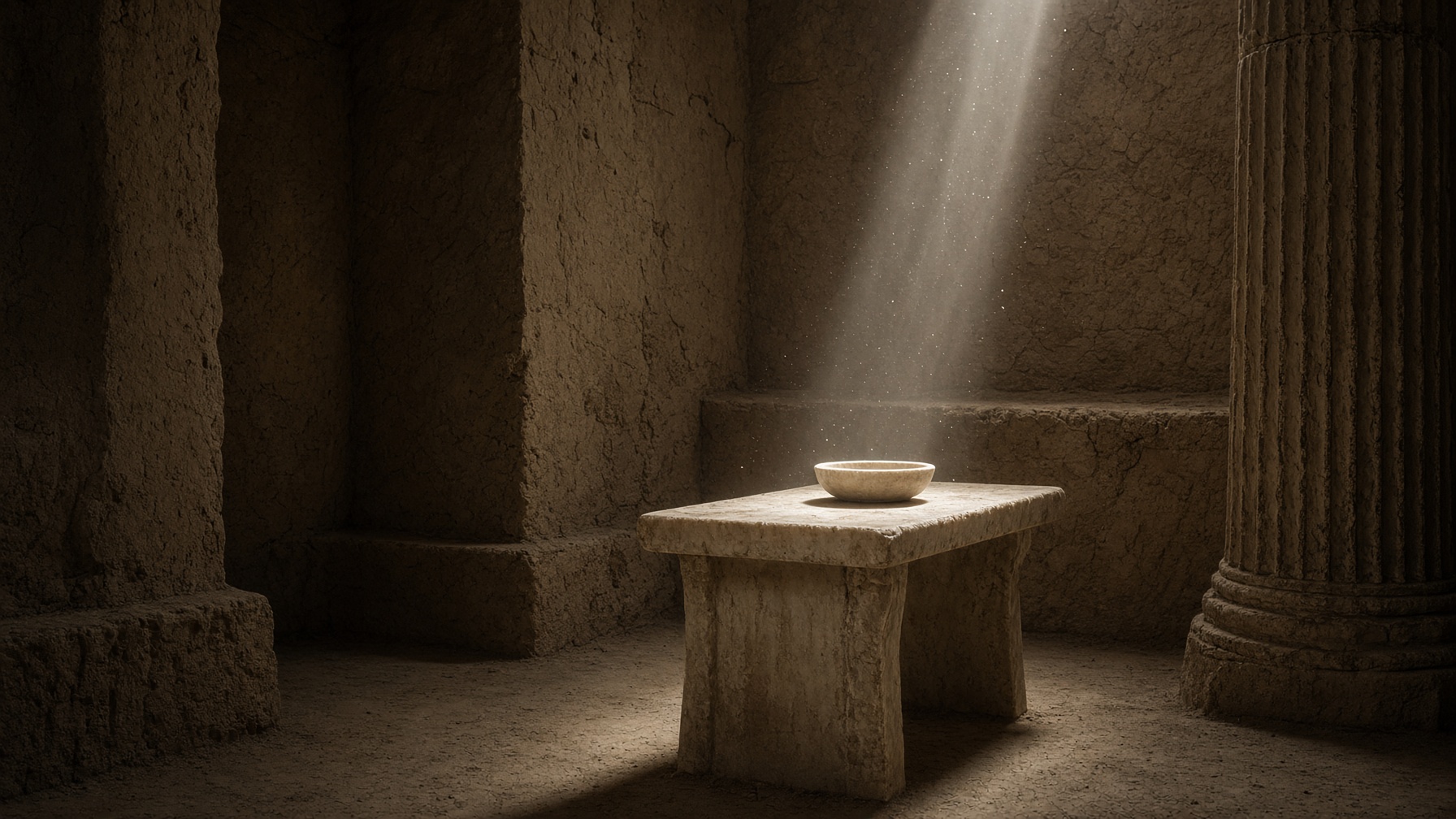
III · Ur
Historical person · Literary narrative
A name at the end of a hymn.
The last hymn of a cycle does not close like the others. It says someone gave birth to this.
Transcript
The Voice What does it take for a human voice to survive a human life? A name at the end of a hymn. The last hymn of a cycle does not close like the others. It says someone gave birth to this. A disk you can hold Ur is a southern Mesopotamian city, on the Euphrates system in what is now southern Iraq, downstream of Uruk. In the twenty-third century BCE it was a centre of the moon god Nanna. The en-priestess of that house was a royal appointment. Enheduanna held the office. She was a daughter of Sargon of Akkad. Akkad is a political fact of her lifetime: a dynasty that ruled a world of Sumerian-speaking cities and their temples. Sumerian remained the language of cult and, later, of the literary copies. Those are not two modern nations. They are a political history and a language that outlived it. Penn Museum B16665 is a calcite disk, about twenty-five centimetres across. It was found in fragments in a later level of the gipar at Ur, the residence of the en-priestess, and reconstructed. The object belongs to her period. The findspot is later. The English label in the photograph is modern. The carved face shows a ritual: a libation poured at a stand, attendants, and a prominent woman in a flounced garment. Popular captions say she pours. The pourer in the scene is a male priest. She is the principal figure. The reverse names En-hedu-ana, priestess of Nanna, wife of Nanna, daughter of Sargon. The disk proves an office and a parentage. It does not prove that she composed the Temple Hymns. It does not prove a modern prize for first author. It is a lifetime object. en-hedu-ana: high priestess, ornament of heaven. An office-name, which is not the same as a modern private signature. It is also not nothing. Two clocks Her lifetime is not her afterlife The disk An Akkadian-period person. Calcite from Ur. The office of en-priestess of Nanna. A daughter of Sargon. An object that could be held while she was alive. Copied tablets The Temple Hymns survive as a Sumerian-language cycle copied, mostly, in Old Babylonian schools centuries later. Hands that were not hers kept a name in a curriculum of clay. Do not collapse the clocks. The disk is not a hymn. The copies are not a lifetime. Forty-two temples, a network in verse The collection now called the Sumerian Temple Hymns is a cycle of hymns to temples, their cities and their gods, stretching across Sumer and Akkad. There are forty-two. Each of the first forty-one ends with a two-line colophon. Hymn 42 does not. It names Enheduanna and claims a composition ‘which no one had composed before.’ The hymns are not a diary. They are a map of cultic geography in language: E-kiš-nu-ĝal at Ur, E-anna at Uruk, the houses of Enlil, Inana, Enki. To copy them is to keep a world of temples in a sequence that can be taught. The compiler of the tablet is En-hedu-ana. My king, something has been created that no one had created before. Do not reduce her to a slogan A named compiler, a contested corpus Popular English calls her the first named author, sometimes the first female author. The disk, the colophon, the first-person voice of other hymns attributed to her (including nin-me-šara, the Exaltation of Inana) are why the claim exists. A world in which almost all Sumerian literature is anonymous makes a name loud. That loudness is historical. Some temples in the cycle may post-date the Old Akkadian period. Some hymns look like reworkings. Most copies are Old Babylonian, centuries later. Miguel Civil treated authorship as unproven. Annette Zgoll, Joan Westenholz and others have argued for a historical voice in nin-me-šara from internal political reference. Monica Phillips’s new work on the Temple Hymns is in progress. Sjöberg 1969 is still the standard edition. The controversy is especially strong for this cycle. Report it. ‘First author’ is a modern prize. The tablets ask a colder question: who is named, in what office, on which witnesses, copied by whom, how long after. A voice that outlives a life by being copied Whatever one decides about composition in the twenty-third century, the transmission is a fact. Scribes copied these hymns for hundreds of years. A named priestess of Ur remains in the stream because clay was made to carry her office-name. That is already a world-making technology: not the invention of writing (which this story does not claim), but the use of writing to keep a particular human voice in a network of temples. Two kinds of number Never collapse them Forty-two hymns. A count of a Sumerian temple-hymn corpus. A list. Like any list, it can be edited, damaged, argued. It is not a cipher. ENHEDUANNA = 42. Full Reduction of a modern English spelling. English Ordinal 87, Reverse Ordinal 183, Reverse Reduction 48. One face locks. Three do not. This is CIPHER’s instrument, not Sumerian arithmetic. INANNA. On the same four faces: 53, 109, 26, 37. Miss. The miss is kept. We do not reach for Ištar to rescue a number. What this story thinks a world needs A world, here, needs temples that can be addressed, a priestess who can be installed across a new political geography, and a form of words that can be copied after the priestess is dead. Authorship is not a modern luxury laid on top. It is one name’s wager that a composition can be born and attributed. How a human voice outlives a human life: by entering a curriculum of clay. How does a human voice outlive a human life? How the English faces are calculated CIPHER owns the instrument. This page owns the historical voice.
III
Historical person · Literary narrative
Akkadian-period Ur; Sumerian-language hymns copied later
Person and disk, twenty-third century BCE. Surviving hymn copies, centuries after.
The object
Penn B16665, a calcite disk from Ur
The question
What does it take for a human voice to survive a human life?
Bring me there
A disk you can hold
Ur is a southern Mesopotamian city, on the Euphrates system in what is now southern Iraq, downstream of Uruk. In the twenty-third century BCE it was a centre of the moon god Nanna. The en-priestess of that house was a royal appointment.
Enheduanna held the office. She was a daughter of Sargon of Akkad. Akkad is a political fact of her lifetime: a dynasty that ruled a world of Sumerian-speaking cities and their temples. Sumerian remained the language of cult and, later, of the literary copies. Those are not two modern nations. They are a political history and a language that outlived it.
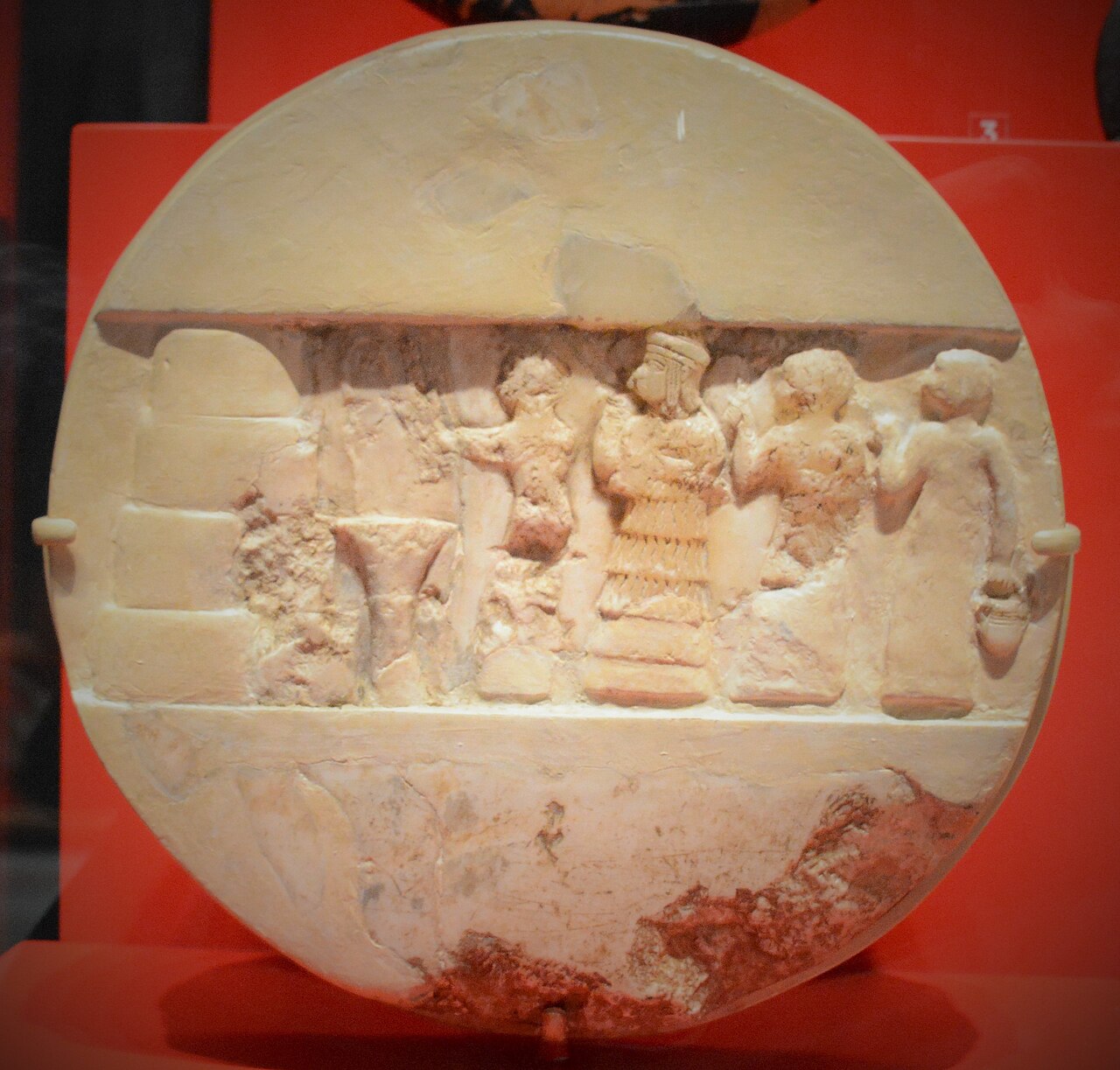
Penn Museum B16665 is a calcite disk, about twenty-five centimetres across. It was found in fragments in a later level of the gipar at Ur, the residence of the en-priestess, and reconstructed. The object belongs to her period. The findspot is later. The English label in the photograph is modern.
The carved face shows a ritual: a libation poured at a stand, attendants, and a prominent woman in a flounced garment. Popular captions say she pours. The pourer in the scene is a male priest. She is the principal figure. The reverse names En-hedu-ana, priestess of Nanna, wife of Nanna, daughter of Sargon.
The disk proves an office and a parentage. It does not prove that she composed the Temple Hymns. It does not prove a modern prize for first author. It is a lifetime object.
en-hedu-ana: high priestess, ornament of heaven. An office-name, which is not the same as a modern private signature. It is also not nothing.
Two clocks
Her lifetime is not her afterlife
Her lifetime
The disk
An Akkadian-period person. Calcite from Ur. The office of en-priestess of Nanna. A daughter of Sargon. An object that could be held while she was alive.
Her literary afterlife
Copied tablets
The Temple Hymns survive as a Sumerian-language cycle copied, mostly, in Old Babylonian schools centuries later. Hands that were not hers kept a name in a curriculum of clay.
Do not collapse the clocks. The disk is not a hymn. The copies are not a lifetime.
Let the story happen
Forty-two temples, a network in verse
The collection now called the Sumerian Temple Hymns is a cycle of hymns to temples, their cities and their gods, stretching across Sumer and Akkad. There are forty-two. Each of the first forty-one ends with a two-line colophon. Hymn 42 does not. It names Enheduanna and claims a composition ‘which no one had composed before.’
The hymns are not a diary. They are a map of cultic geography in language: E-kiš-nu-ĝal at Ur, E-anna at Uruk, the houses of Enlil, Inana, Enki. To copy them is to keep a world of temples in a sequence that can be taught.
The compiler of the tablet is En-hedu-ana. My king, something has been created that no one had created before.
Do not reduce her to a slogan
A named compiler, a contested corpus
Popular English calls her the first named author, sometimes the first female author. The disk, the colophon, the first-person voice of other hymns attributed to her (including nin-me-šara, the Exaltation of Inana) are why the claim exists. A world in which almost all Sumerian literature is anonymous makes a name loud. That loudness is historical.
Some temples in the cycle may post-date the Old Akkadian period. Some hymns look like reworkings. Most copies are Old Babylonian, centuries later. Miguel Civil treated authorship as unproven. Annette Zgoll, Joan Westenholz and others have argued for a historical voice in nin-me-šara from internal political reference.
Monica Phillips’s new work on the Temple Hymns is in progress. Sjöberg 1969 is still the standard edition. The controversy is especially strong for this cycle. Report it. ‘First author’ is a modern prize. The tablets ask a colder question: who is named, in what office, on which witnesses, copied by whom, how long after.
Stop at the strange thing
A voice that outlives a life by being copied
Whatever one decides about composition in the twenty-third century, the transmission is a fact. Scribes copied these hymns for hundreds of years. A named priestess of Ur remains in the stream because clay was made to carry her office-name.
That is already a world-making technology: not the invention of writing (which this story does not claim), but the use of writing to keep a particular human voice in a network of temples.
Show me the source
Disk, hymns, editions
Spelling: Sumerian En-hedu-ana is often written Enheduana in current Assyriology (one n). English convention frequently writes Enheduanna (two n’s). This site displays ENHEDUANNA when calculating the modern English cipher, because that is the spelling being calculated, not because two n’s are more authentic. The hymns first. The historical problem first. The English wink later.
Penn Museum B16665 (Disk of Enheduanna). Temple Hymns: Sjöberg and Bergmann 1969; ETCSL 4.80.1; Meador, Princess, Priestess, Poet (2009) as a literary translation, not a critical edition. See also enheduana.org and the 2022 Morgan Library exhibition She Who Wrote.
Open the sourceTwo kinds of number
Never collapse them
The history
What, exactly, is historical here?
The calcite disk, the office of en-priestess of Nanna at Ur, and the parentage as a daughter of Sargon are historical. The Temple Hymns survive as later copies. Whether she composed that cycle is a scholarly dispute. First author is a modern prize.
The history
Forty-two hymns
A count of a Sumerian temple-hymn corpus. A list. Like any list, it can be edited, damaged, argued. It is not a cipher.
Wink
ENHEDUANNA = 42
Full Reduction of a modern English spelling. English Ordinal 87, Reverse Ordinal 183, Reverse Reduction 48. One face locks. Three do not. This is CIPHER’s instrument, not Sumerian arithmetic.
Miss
INANNA
On the same four faces: 53, 109, 26, 37. Miss. The miss is kept. We do not reach for Ištar to rescue a number.
From this story only
What this story thinks a world needs
A world, here, needs temples that can be addressed, a priestess who can be installed across a new political geography, and a form of words that can be copied after the priestess is dead. Authorship is not a modern luxury laid on top. It is one name’s wager that a composition can be born and attributed.
How a human voice outlives a human life: by entering a curriculum of clay.
How does a human voice outlive a human life?
Knock
ENHEDUANNA
The word is structurally central (the named compiler). The spelling is the conventional English double-n form, declared before the result. The hymn-count of forty-two is a different species of number and remains in view. INANNA’s miss remains in view. The plate does not outrank the disk.
English Ordinal
87
Reverse Ordinal
183
Full Reduction
42
Reverse Reduction
48
Two kinds of forty-two. The hymns are not a proof of the cipher. The cipher is not a proof of the hymns.